
Going Small Is the Wrong Answer
Why Cincinnati’s BuildReady Plan Misses the Mark

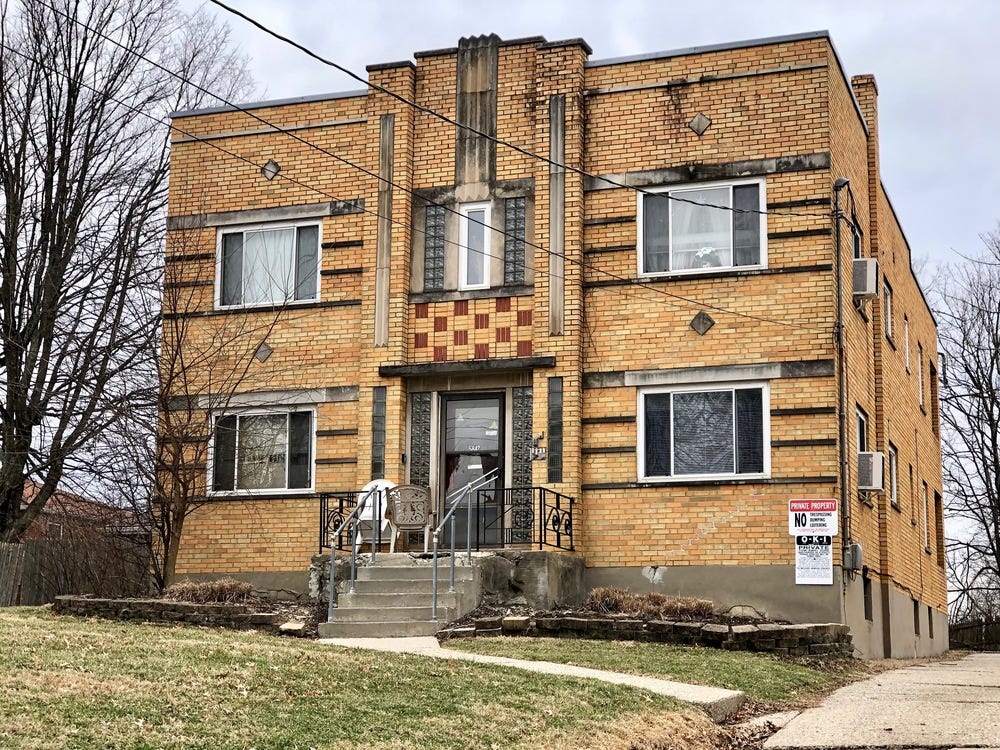
Cincinnati just landed a $2 million HUD grant to launch “BuildReady,” a program to develop free, pre-approved design templates for two-, three-, and four-unit buildings that any developer can pull off the shelf. City Hall is framing this as a breakthrough in our housing fight. It isn’t. It’s a well-intentioned distraction from the only lever that actually moves institutional capital into this city: real estate tax abatement. If Cincinnati is serious about fixing its housing problem, the answer is not to go small. It’s to go big, and every city around us has already figured that out.
“Cincinnati does not have a ‘we need more fourplexes’ problem. We have a capital stack problem, and it is entirely self-inflicted.”
The Problem Already Lives on Harrison Avenue
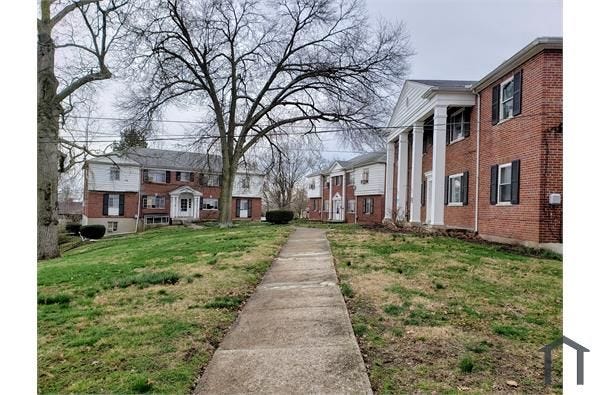
Drive Harrison Avenue through Westwood, cut through Bracken Woods, and you’ll see the case study in real time. Block after block of nearly identical fourplexes: one- and two-bedroom units, boiler heat, a single central hot water heater, pitched or flat roofs, same floor plan up and down. Cincinnati’s existing multifamily stock is already overwhelmingly dominated by buildings under 100 units, and that is not a feature of our market; it is a detriment to it.
BuildReady’s own rollout makes this explicit. The pre-approved templates are specifically aimed at two-, three-, and four-unit “Middle Housing” buildings. We are about to mass-produce more of exactly the product type we already have too much of.
“We are about to mass-produce more of exactly the product type we already have too much of.”
Why Identical Small Multifamily Is a Race to the Bottom
When you build a bunch of small multifamily properties and then sell them off one by one to individual investors, and every building looks the same inside and out, there is nothing left to compete on except rental rate. That is the definition of a race to the bottom. Here is what happens in practice:
Owners cannot differentiate on amenities, management quality, or product, so they differentiate on price
Margins compress, and when margins compress, maintenance gets deferred
There is no professional management layer because the asset is too small to support one
The guy down the street has the exact same building, so there is zero incentive to reinvest
Over a 20-year horizon, the entire corridor drifts downward together
That is Westwood today. That is Price Hill today. BuildReady accelerates this dynamic by making it faster and cheaper to produce cookie-cutter 2–4 unit product, which is precisely the product class that cannot support long-term professional ownership.
“When every building looks the same inside and out, there is nothing left to compete on except rental rate. That is the definition of a race to the bottom.”
Look North: Columbus Is Eating Our Lunch
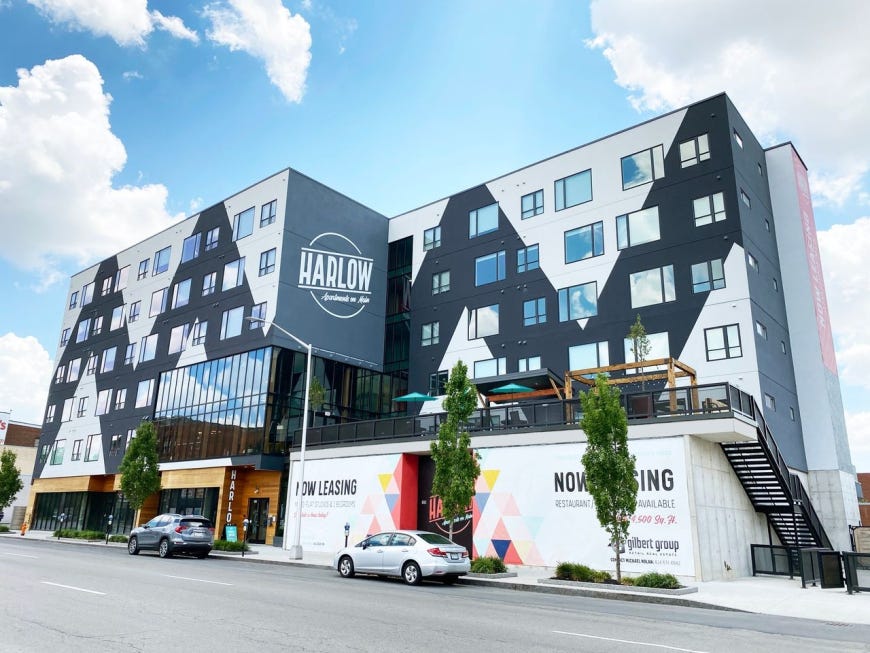
Ohio already has a blueprint for what programmatic, long-term abatement delivers, and it sits two hours up I-71. Under the Community Reinvestment Area framework, Ohio municipalities can offer up to 15 years and up to 100% abatement on multifamily projects with more than two units. Columbus has leaned in hard. Its Residential Tax Incentive program is designed explicitly to drive private investment into mixed-income neighborhoods, and in October 2025 the city supercharged it.
Under Ordinance 1907-2025, Columbus created a one-time fee-in-lieu option inside its citywide CRA that eliminates the need to negotiate an incentive agreement at all. A 220-unit market-ready project in Columbus now unlocks roughly $571,509 per year in avoided property taxes — $8.57 million over 15 years — with a net 12-year 100% abatement after paying the fee. Pay $1.78 million up front, keep $6.8 million in tax savings, and close faster because you do not need a negotiated agreement. That is how you build a capital stack.
“Pay $1.78 million up front, keep $6.8 million in tax savings, close faster. That is how you build a capital stack.”
Yes, downtown Columbus is overbuilt. But drive Dublin, Grandview, New Albany, Grove City — the suburban multifamily product is professionally managed, well-capitalized, and holding up because the underlying tax treatment makes it worth holding. Columbus also uses the same toolkit for infill, including a 100% 15-year abatement on the long-delayed Merchant Building redevelopment. The incentive is programmatic, it is predictable, and it is closing deals in 2025 and 2026.
Look South: Northern Kentucky’s IRB Playbook
Cross the river and Kentucky just handed Northern Kentucky an even sharper tool. Senate Bill 25, enacted in 2025, expanded the definition of “industrial building” under KRS 103.200(1) to include multifamily housing projects of 48 or more units, making them eligible for Industrial Revenue Bonds. IRBs are a TIF-adjacent mechanism: the local government issues conduit bonds, takes title for tax purposes, leases back to the developer, and the project effectively receives a long-term property tax abatement while the bonds are outstanding. Depending on the rent structure, IRBs can be issued tax-exempt or taxable.
The legislature’s rationale was blunt: Senator Robby Mills told the committee that large apartment complexes are “just as important as a factory” and should access the same economic development tools. Kentucky is treating institutional multifamily as economic development infrastructure. Ohio law allows the same outcome through CRAs. Cincinnati just doesn’t deploy it at scale.
“Kentucky is treating institutional multifamily as economic development infrastructure. Cincinnati just doesn’t deploy it at scale.”
Cincinnati’s Program, By Contrast, Is a Slog
Cincinnati’s Residential Tax Abatement is not competitive with what Columbus and Northern Kentucky are running. You can spend 18 months dicking around the application process and come out the other side with a partial abatement that does not move the needle. The cap structures, the neighborhood tiering, the 6-month permit windows, and the thin staffing at the city make it worse. When a developer can pick up the phone in Columbus, elect a fee-in-lieu, and unlock a 12-year net 100% abatement with no agreement, or cross the bridge to Covington and structure an IRB on a 48+ unit deal, why would institutional capital fight through Cincinnati’s process?
“18 months of process for a 50% abatement isn’t a program. It’s a deterrent.”
How the Region Stacks Up
Cincinnati
Headline incentive: Tiered, capped abatement, often 5–15 years with value caps
Process: Long review, permit and staffing constraints
Orientation: Small multifamily, now reinforced by pre-approved 2–4 unit plans
Columbus
Headline incentive: Up to 15-year, 100% CRA abatement; fee-in-lieu unlocks a ~12-year net 100% abatement with no negotiated agreement
Process: Programmatic and by-right under Ordinance 1907-2025
Orientation: Scale multifamily in mixed-income neighborhoods
Suburban Indianapolis (Carmel / Zionsville)
Headline incentive: 15-year, 100% by-right abatements marketed directly to buyers
Process: Standardized and predictable
Orientation: Institutional-quality for-sale and rental product
Northern Kentucky
Headline incentive: IRB-based long-term abatement on projects of 48+ units
Process: Local conduit bond issuance with lease-back structure
Orientation: Large institutional multifamily
Hooks Are Fine. Just Write the Check.
If the city is worried about flippers arbitraging the abatement, fine — put hooks on it. Require a 5-year hold. Require professional third-party management. Require minimum unit counts (say, 48+ to mirror Kentucky’s IRB threshold ). Require reporting. A 5-year hold is a problem for brokers because it kills a fast resale fee. It is not a problem for developers and it is not a problem for investors. Developers underwrite to 7–10 year holds on stabilized multifamily already. Long-dated capital wants long-dated abatement. The two fit together.
“A 5-year hold is a problem for brokers. It is not a problem for developers, and it is not a problem for investors.”
The Scale of the Problem Demands Scale of Response
My entire career I have been hearing the same number: Cincinnati is short roughly 30,000 housing units across the spectrum. The LISC Greater Cincinnati and Community Building Institute work, the foundational 2017 report everyone still cites, put the deficit at roughly 28,000 affordable and available units. More recent LISC analysis frames it as matching roughly 40,000 vacant units in Hamilton County with a 40,000-unit deficit of affordable homes. HUD data has shown a deficit of nearly 30,000 affordable and available units in Hamilton County for extremely low-income renters alone. The National Low Income Housing Coalition has pegged the metro gap as high as 49,681 units, and some analyses put it at 50,000 across the 15-county region.
You do not close a 30,000 to 50,000 unit gap with pre-approved fourplex plans. You close it with 200-, 300-, 500-unit projects delivered by sponsors who can hold, manage, and reinvest over decades. That requires a capital stack that works, and the capital stack works when the tax treatment is programmatic, generous, and long.
“You do not close a 30,000-unit gap with stock plans for fourplexes. You close it with 300-unit projects and sponsors who can hold for decades.”
What Cincinnati Should Actually Do:
A $2 million HUD grant aimed at producing stock plans for fourplexes is solving the wrong problem. Design fees and plan review are not why institutional-quality multifamily is not getting built in Cincinnati. Capital stack economics are. If City Hall wants housing that lasts:
Adopt a programmatic, 15-year, 100% CRA abatement by right for qualifying multifamily, mirroring what Ohio statute already permits and what Columbus has operationalizedohioline.osu+1
Add a fee-in-lieu option that bypasses the negotiated agreement, copying Ordinance 1907-2025 line for line
Create a Cincinnati-side equivalent to Kentucky’s IRB pathway for 48+ unit projects, structured through the Port or a similar conduit issuer
Tier the program to reward scale (100+ units), professional management, and long holds — not fourplex replication
Stop subsidizing the replication of the Westwood fourplex, which is already the dominant product type and already filtering down
Fund enough staff at Buildings and Inspections and Community Development to actually process deals on a timeline that matches capital markets
Cincinnati does not have a “we need more fourplexes” problem. We have a capital stack problem, and it is entirely self-inflicted. The city needs to pull its head out of its own way. Columbus figured this out. Indianapolis figured this out. Northern Kentucky figured this out. Until Cincinnati does the same, BuildReady is just a faster way to build the next generation of buildings nobody is incentivized to maintain — and the 30,000-unit gap keeps growing while we hand out stock plans.
“Columbus figured this out. Indianapolis figured this out. Northern Kentucky figured this out. Cincinnati is handing out stock plans.”
Cincinnati already has a tax abatement program for commercial multifamily (5+) properties so the crux of your argument is an apples to oranges comparison: https://www.choosecincy.com/commercialcras
The residential tax abatement program exists separate from the commercial one due to the FHA allowance for a homeowner to get a mortgage for up to a quadplex. The city has almost 2.8k vacant lots that fit the BuildReady program intent. No one is going to build anything larger than quadplex on those lots, so they'll just continue to sit vacant, or only get single family built on them.